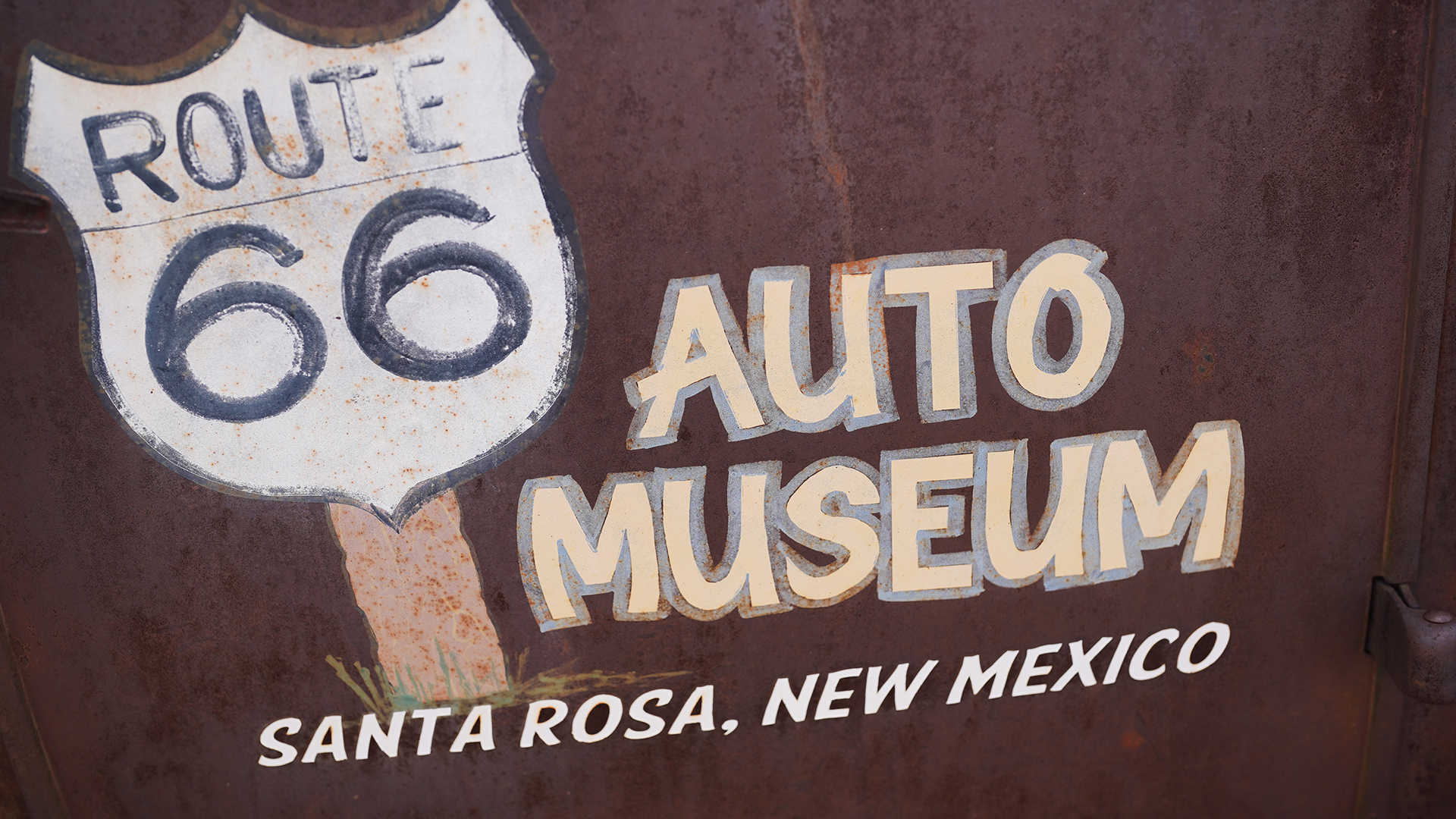
When you see the bright yellow Ford Model A perched atop a pole, you’ve made it. That’s the Route 66 Auto Museum in Santa Rosa, NM.
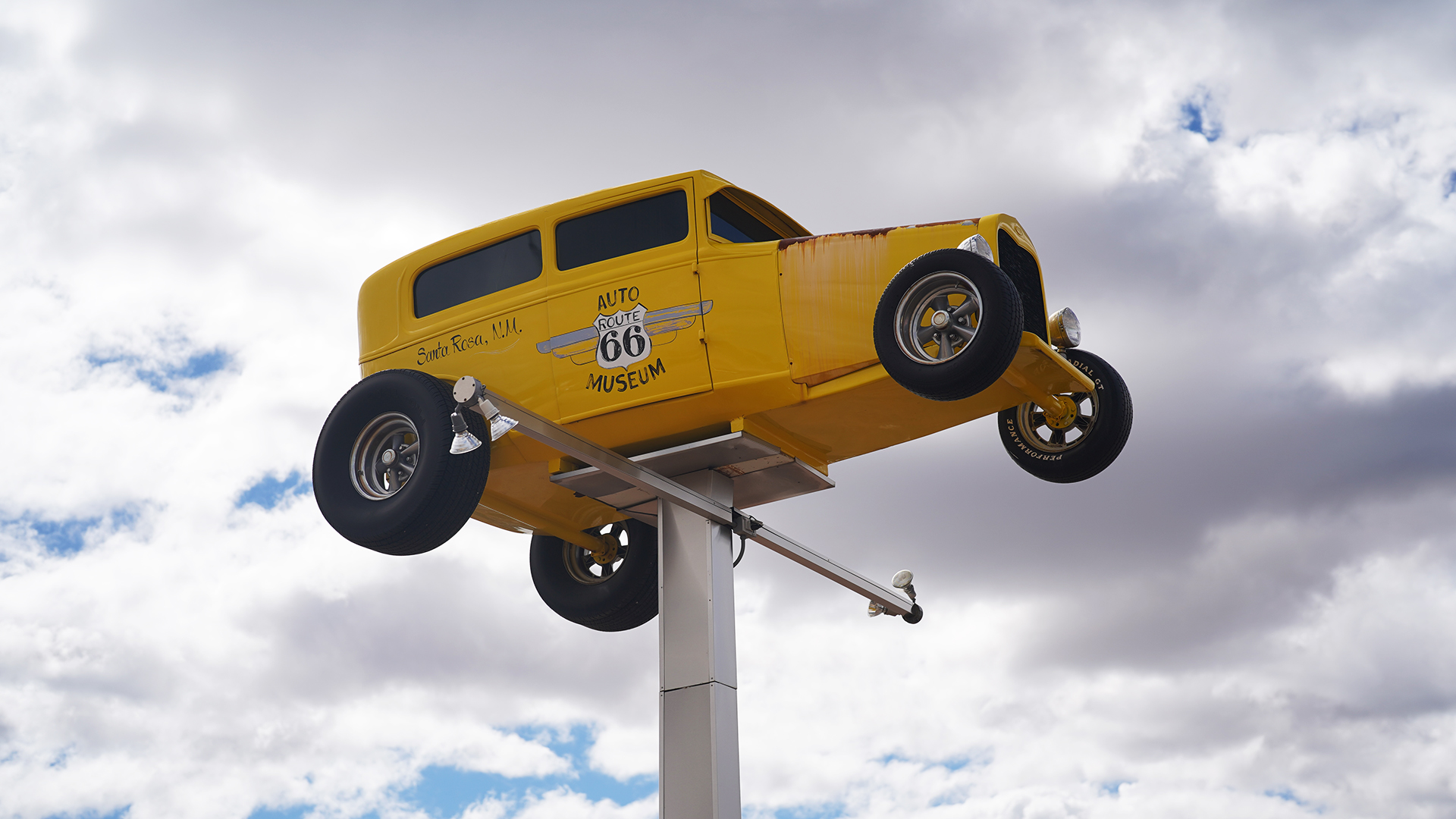
Located on Route 66, this museum was started by James “Bozo” Cordova and his wife Anna. Bozo was a Santa Rosa native who worked all types of auto jobs growing up. He became a mechanic and was also involved in the New Mexico drag racing scene. In the early 1980s he opened “Bozo’s Garage” and started a towing company. On the side, his passion for cars kept him busy buying, restoring, and modifying classic automobiles.
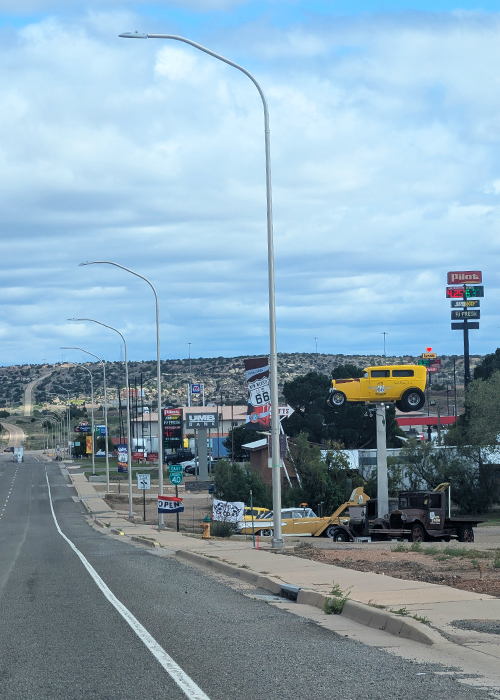
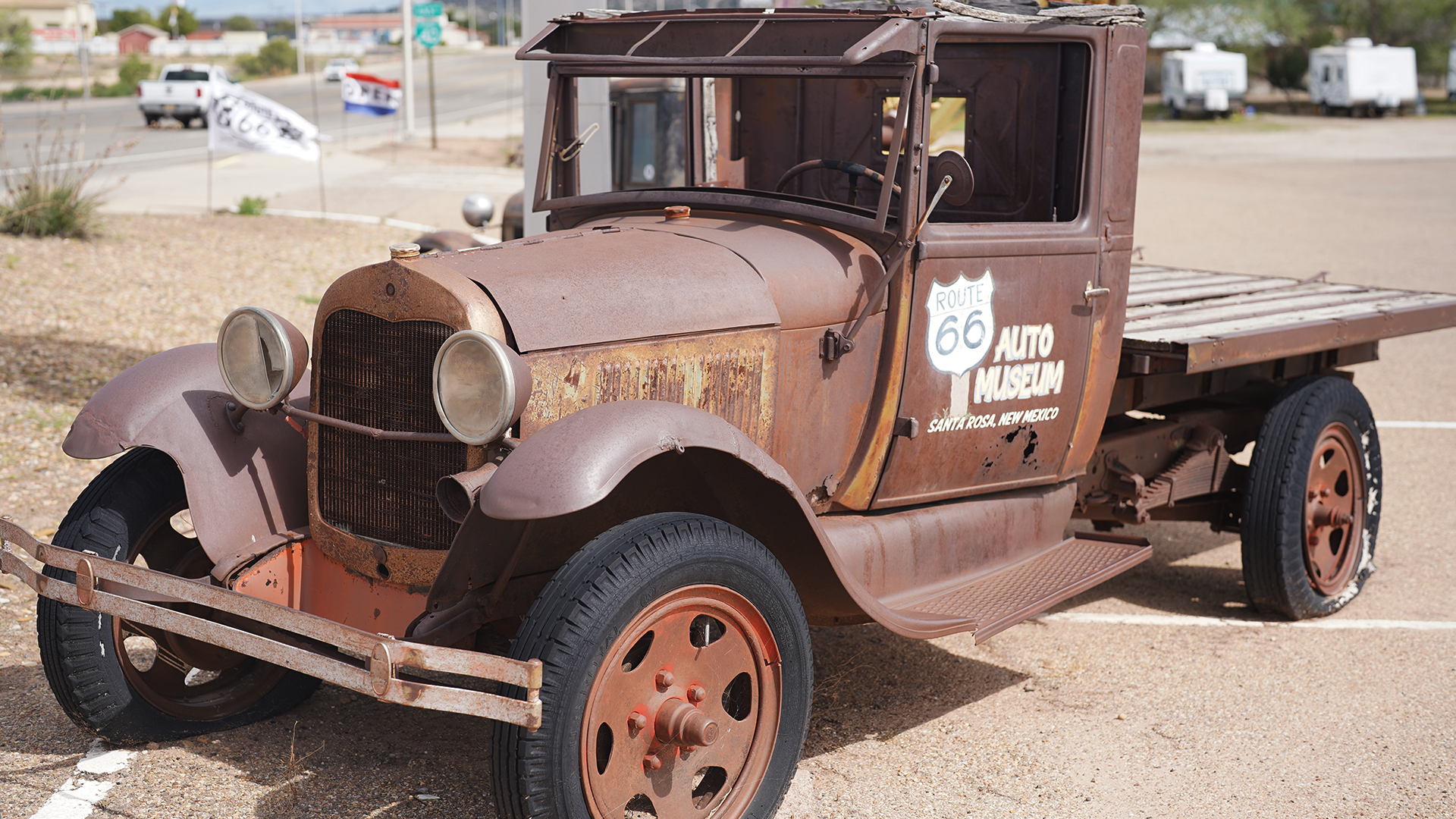
Cars (especially the classics), take up a lot of space. This prompted the couple to open a small showroom in 2000. They displayed 5 classic cars that Bozo had restored to perfect condition. The display room became a popular tourist destination and their automotive collection grew over time. The Route 66 Auto Museum, as it is now known, immediately stands out for the sheer volume its collection consists of. When you first enter the parking lot you’ll see classic vehicles like the flatbed Ford Model AA, which is parked right alongside visitors’ cars.
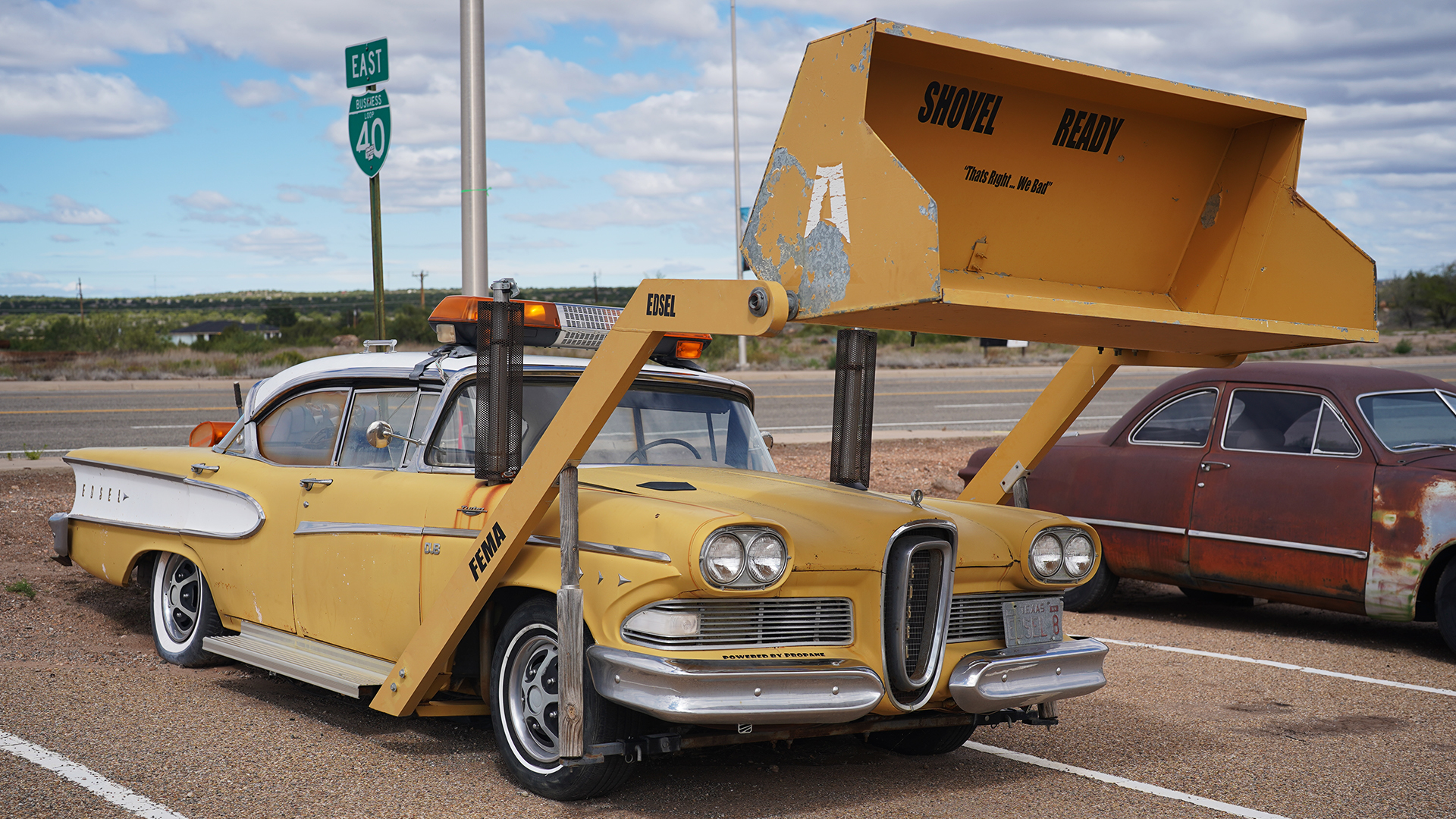
Some of the vehicles on display have been modified into gags such as the Edsel Pacer which has a front loader attached and reads “FEMA,” “That’s Right .. We Bad,” and “Powered By Propane.” This type of quirky humor is common along the Mother Road.
Enter the museum under the sign which reads “Over 30 Cars on Display.” Visitors will find themselves in a gift shop filled with souvenirs and memorabilia from the road and America’s automative heyday. There’s also a retro cafe where you can sit for a quick bite.
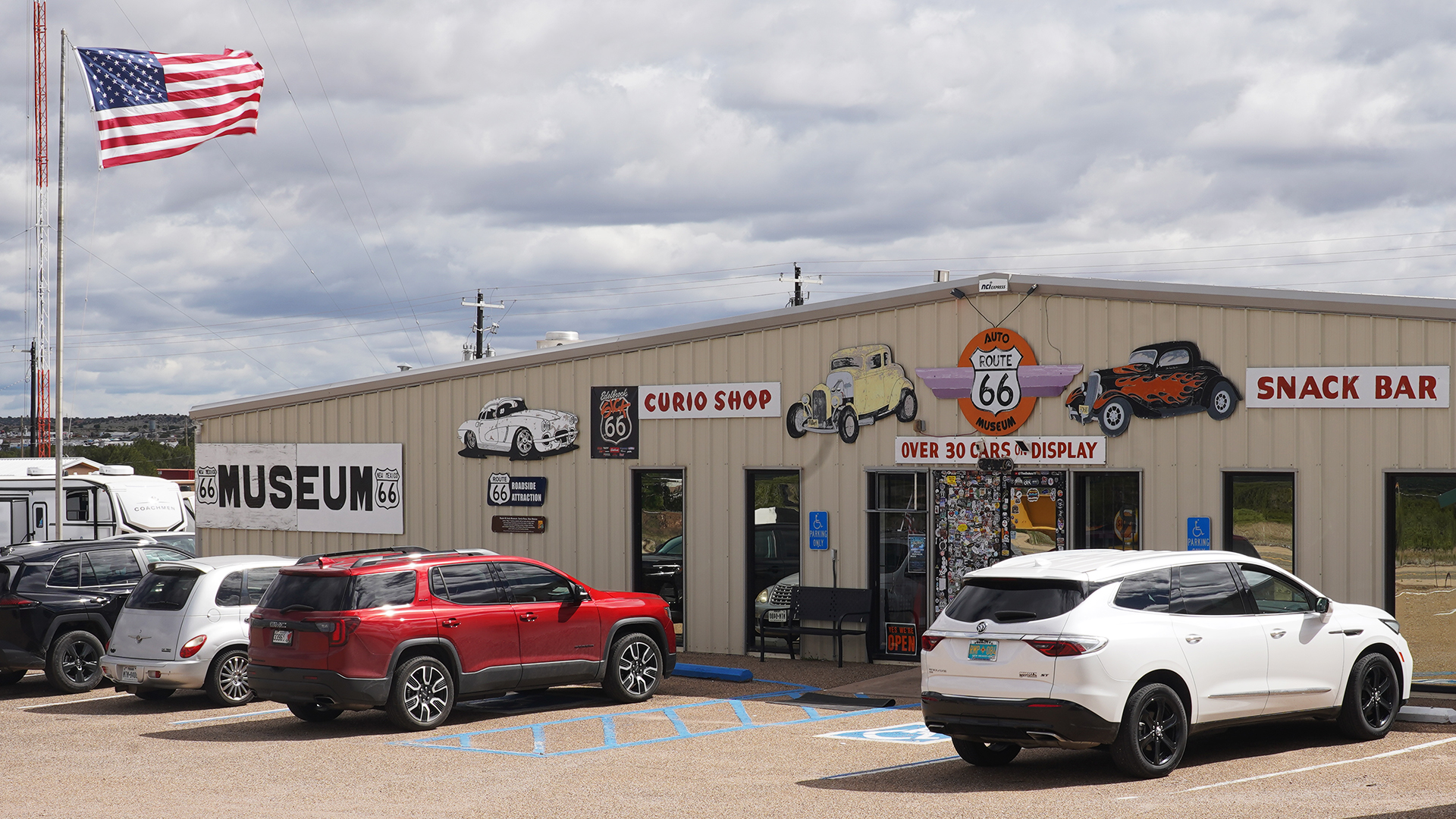
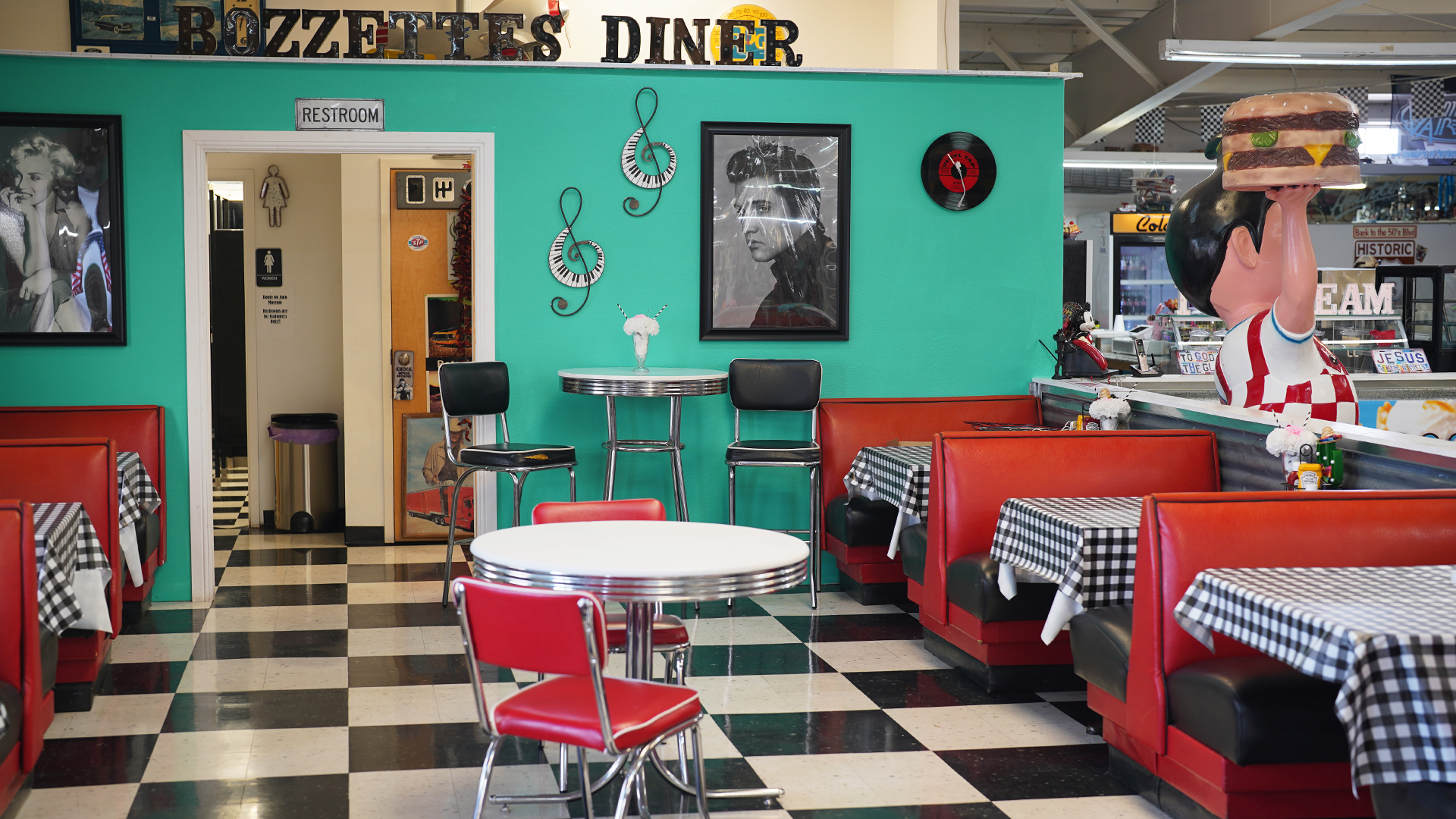
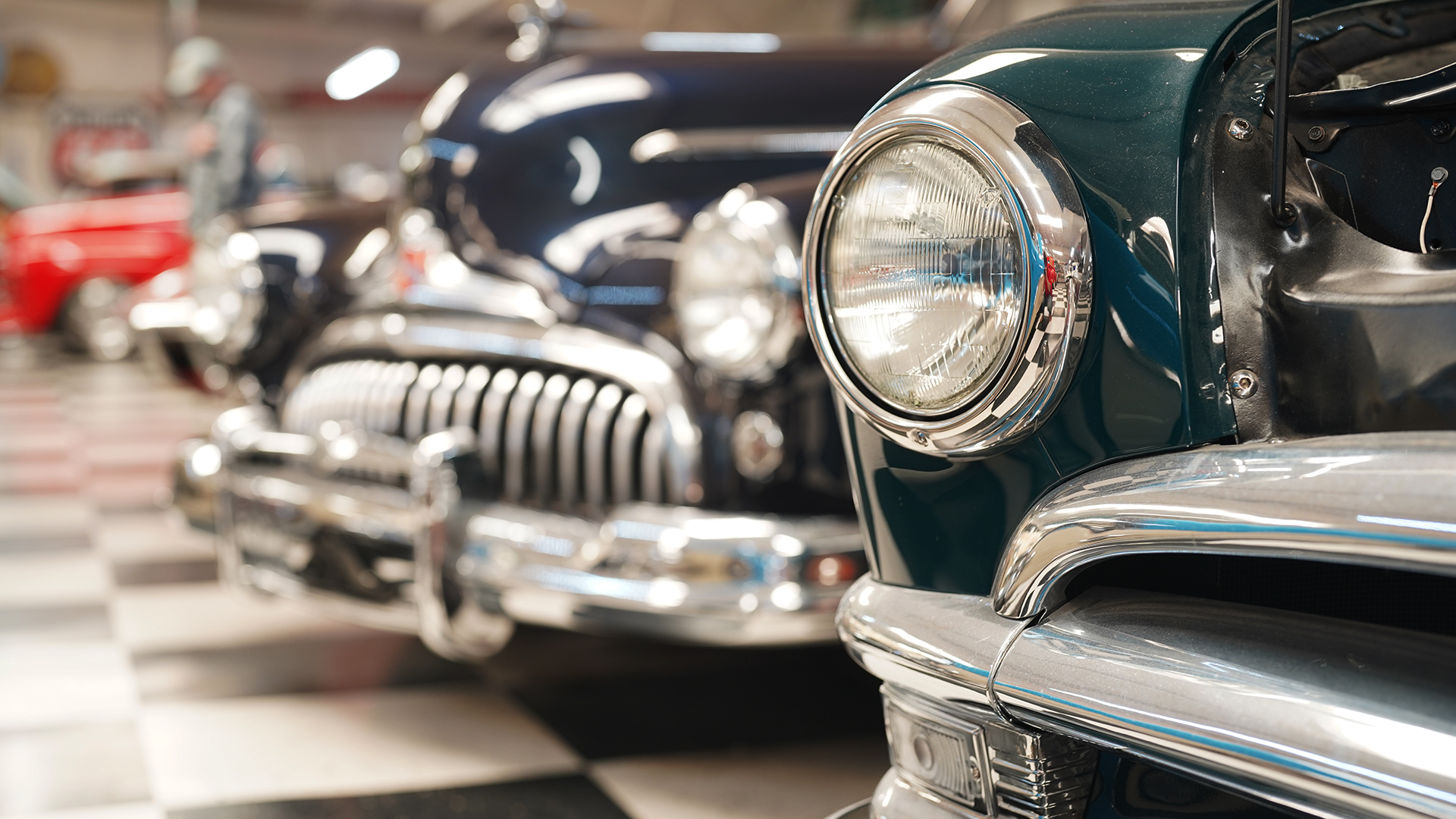
The museum costs only $7 to enter (as of 2026), which is a bargain considering how large a collection is housed in this building. The showroom is dense with classic Buicks, Fords, Chevrolets and more.
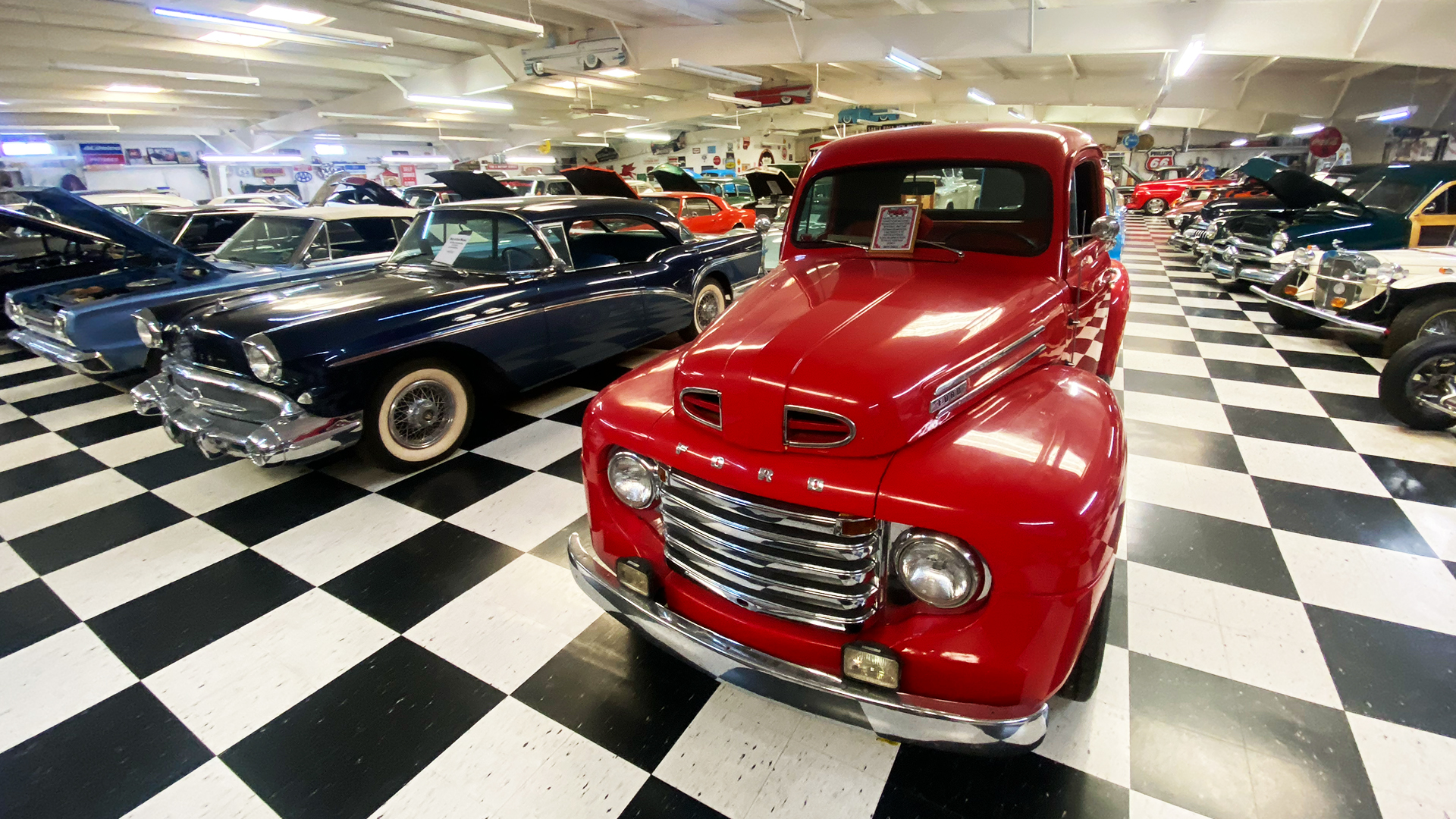
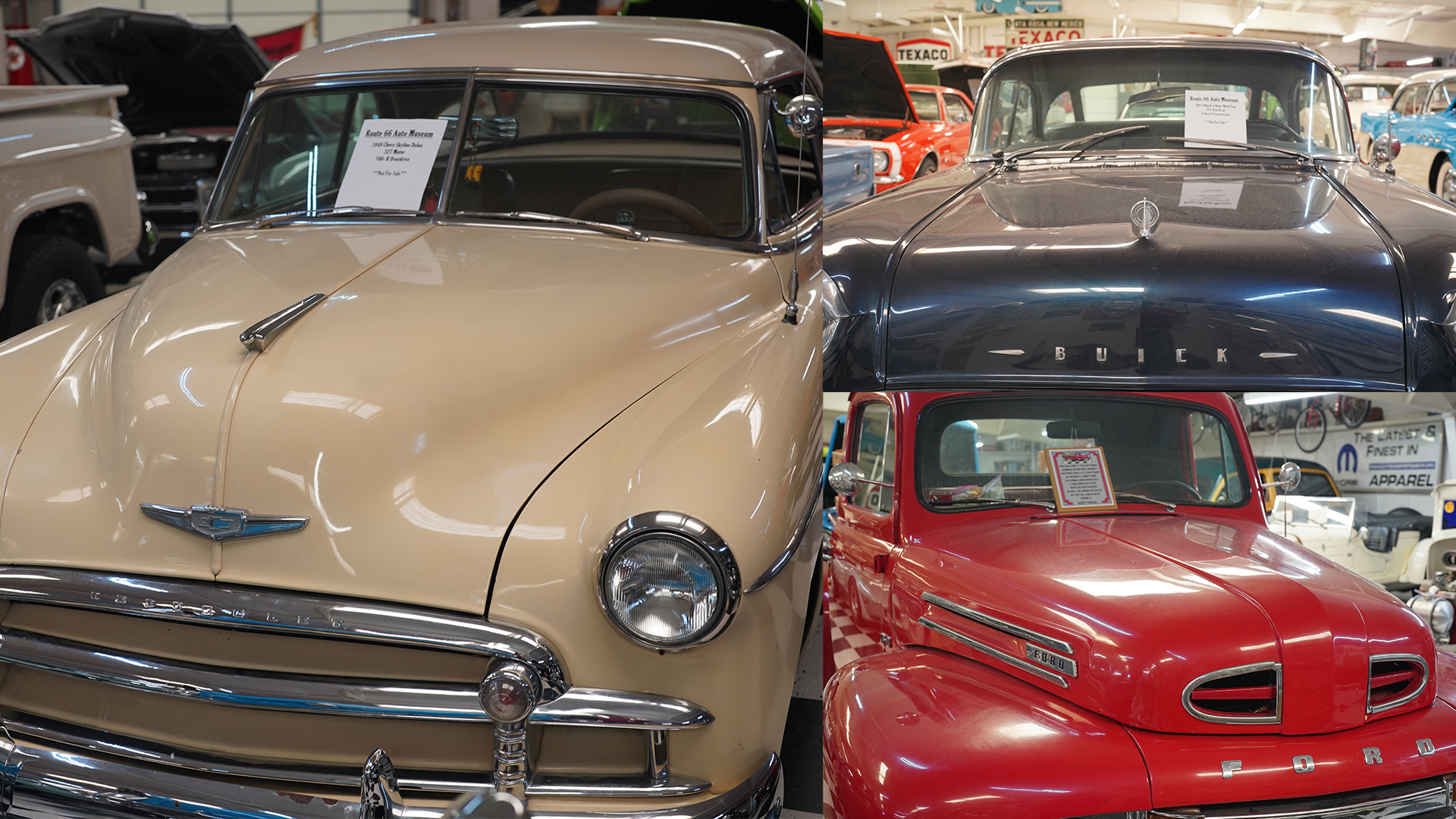
Many of the windows on the vehicles are rolled down so visitors can see the meticulously restored interiors.
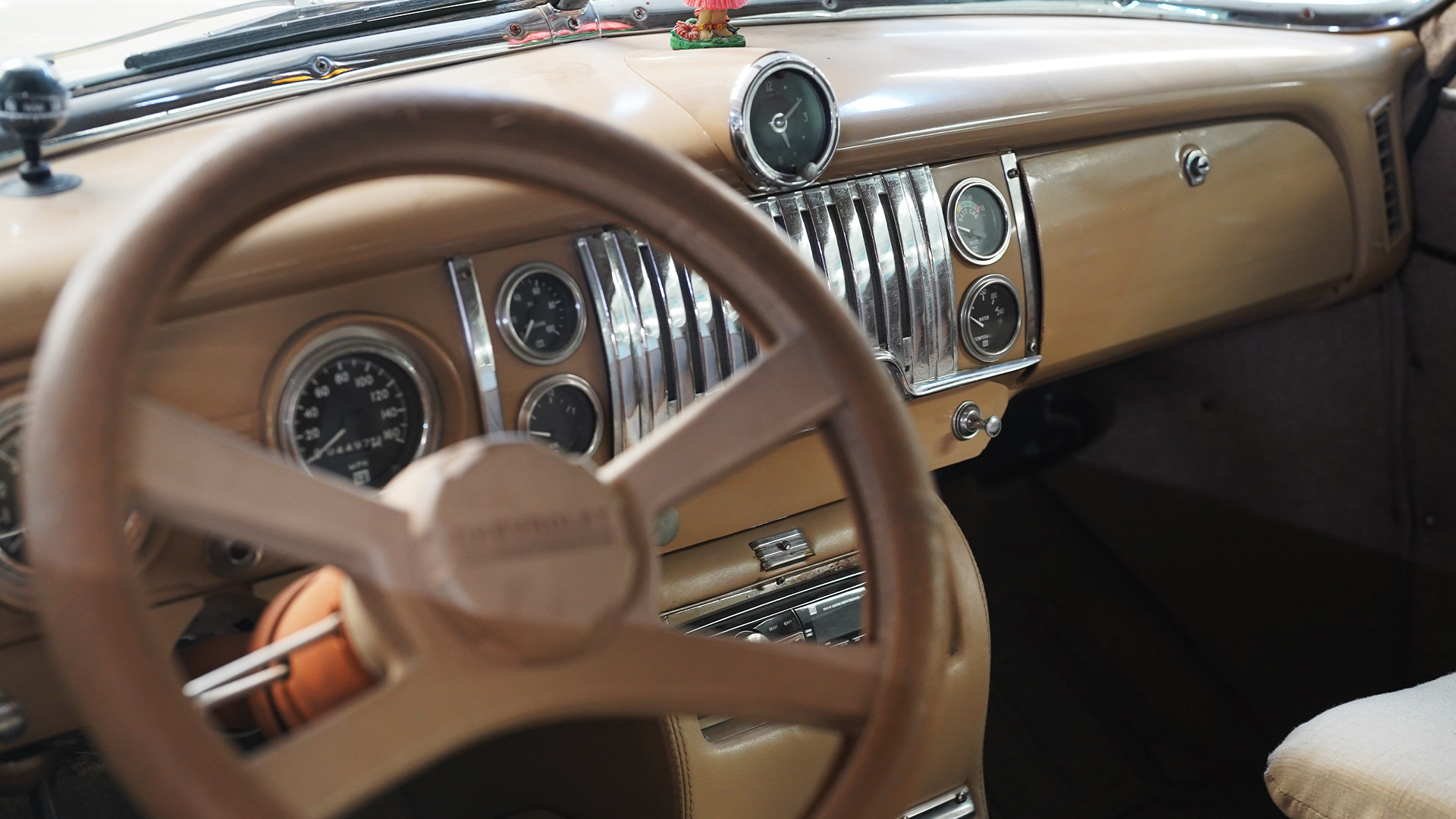
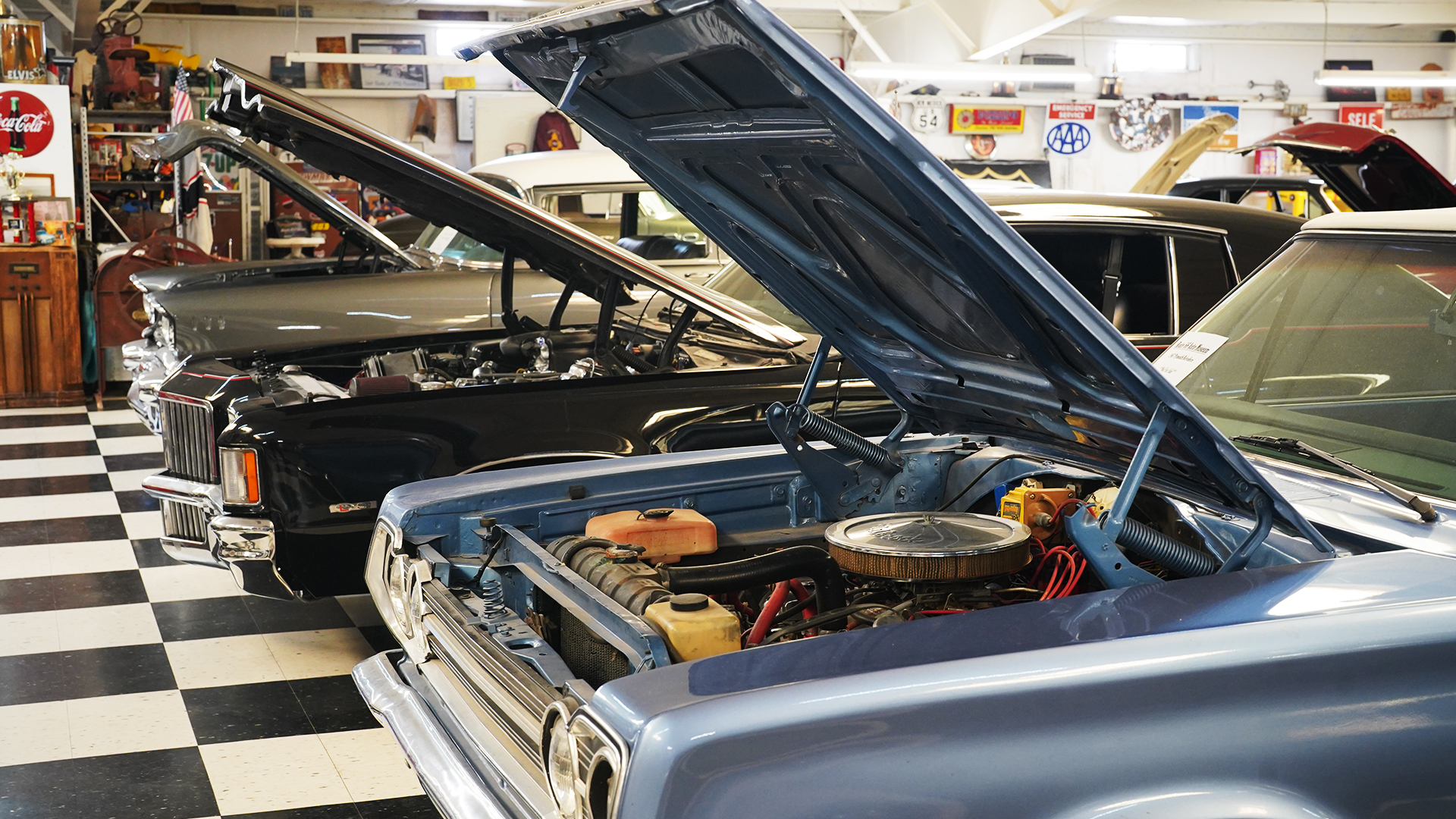
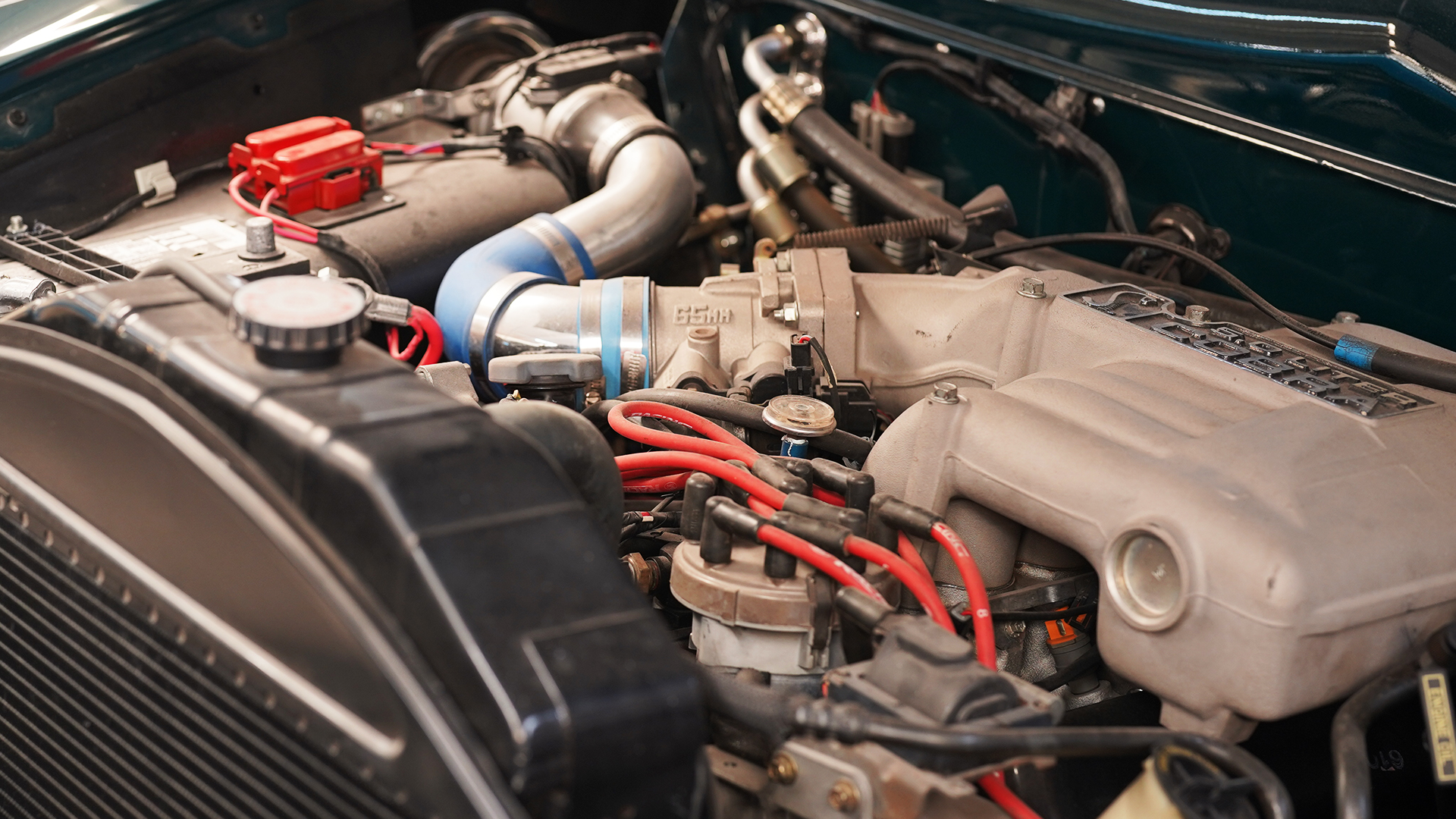
Some of the cars also have their hoods up allowing a detailed look at classic engines.
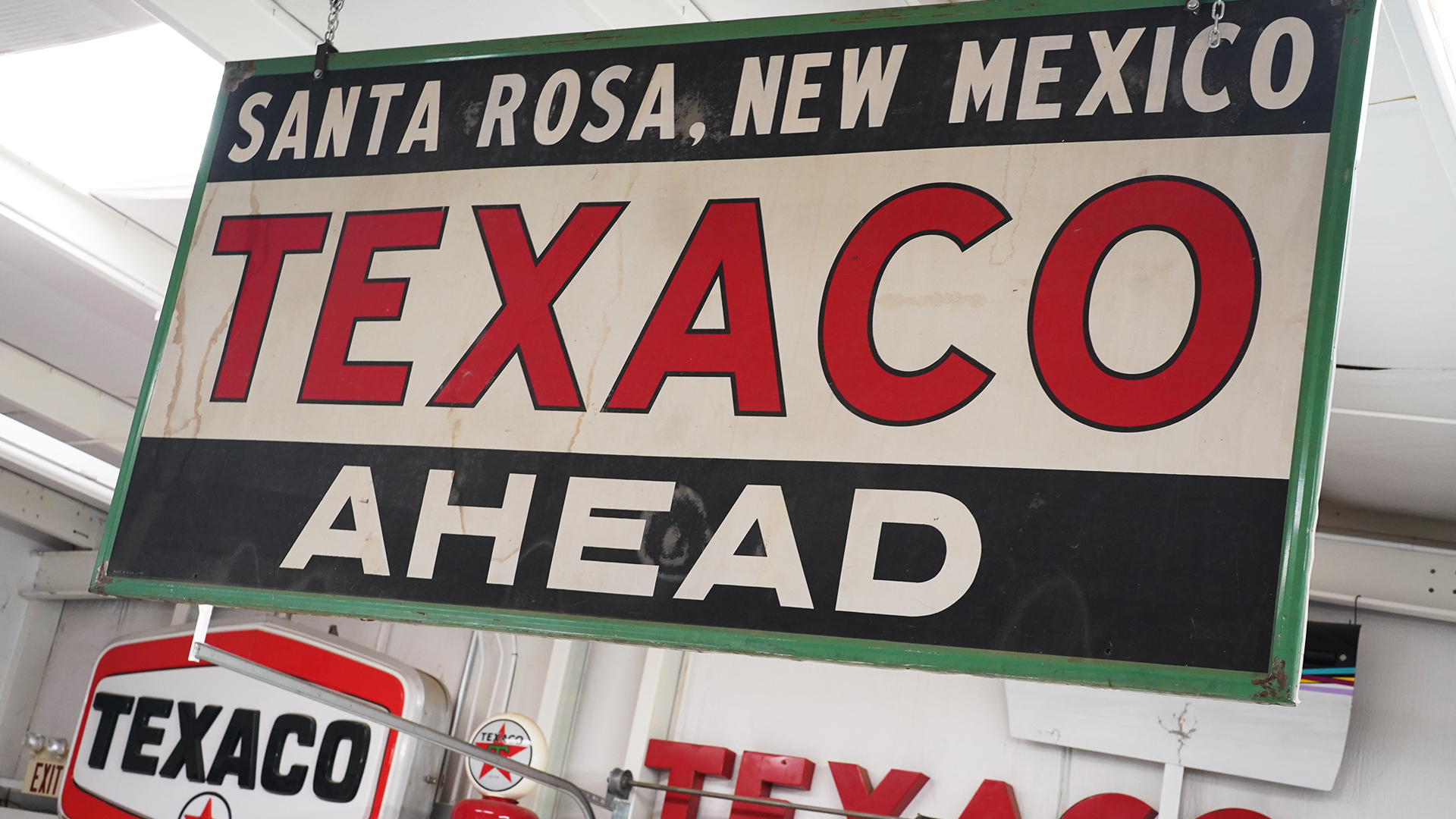
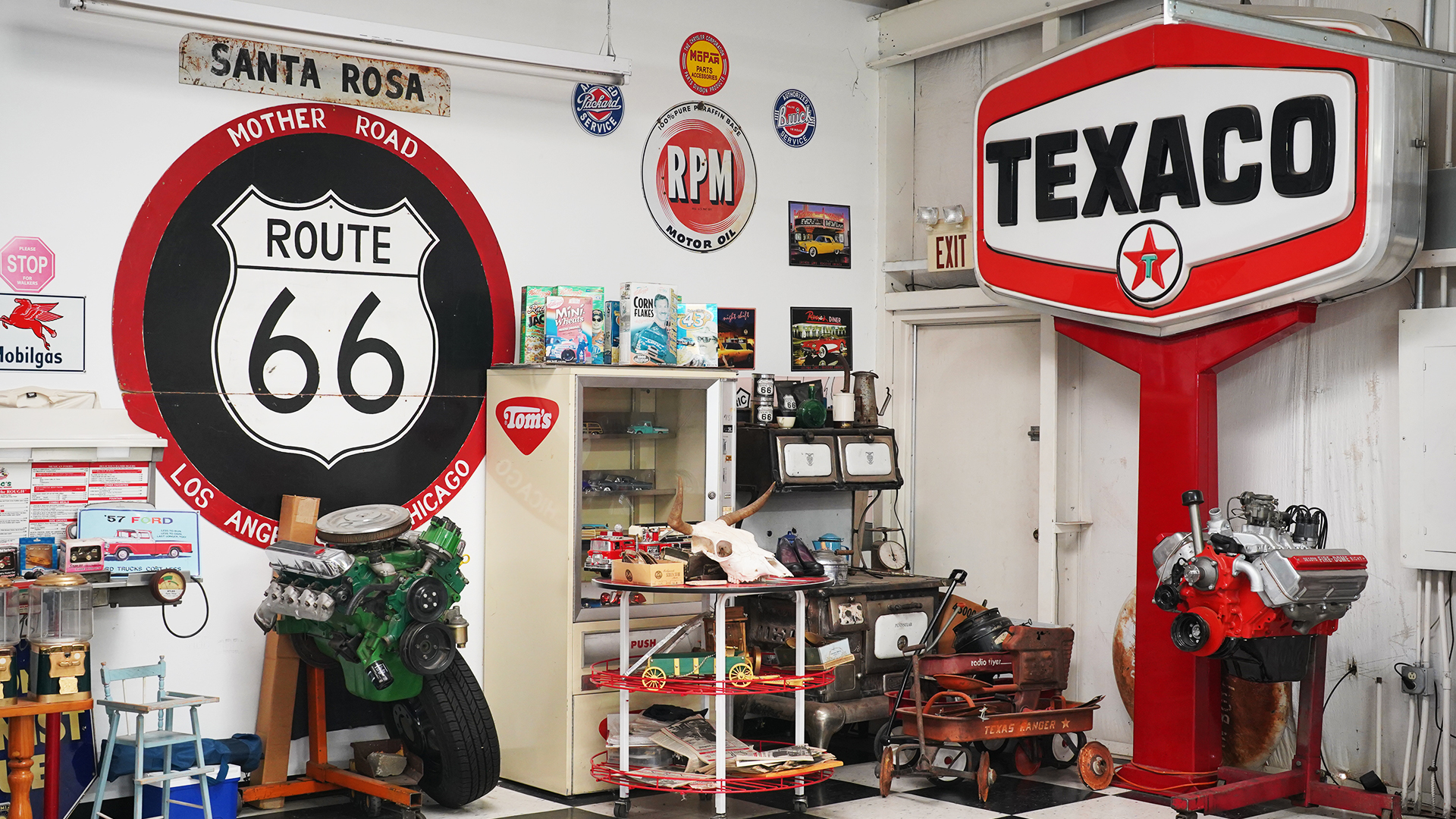
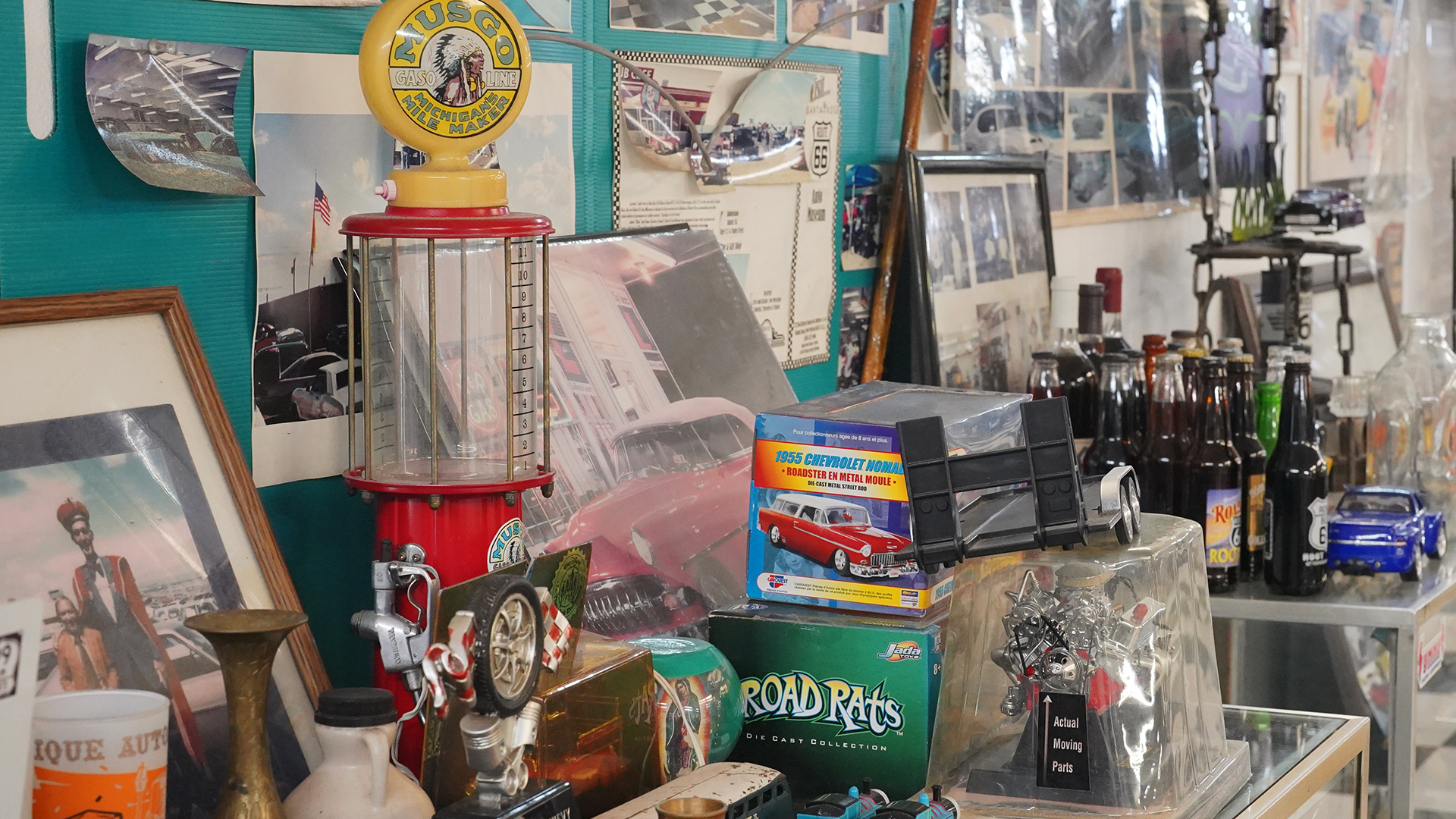
In addition to all the cars, this museum is filled with artifacts from Route 66 and the Golden Age of American Automobiles. Original road signs, old gas pumps, retro soda bottles, and even antique toys help paint a picture of what Route 66 used to feel like when classic cars, muscle cars, and custom hot rods ruled the road.
Walking through the rows of cars provides a detailed, almost scientific, education in the evolution of the automobile.
These cars informed the culture of Route 66 over the decades. Early vehicles frequently suffered from blown tires and overheating (especially along unpaved sections of road). There was a constant demand for tune-ups and repair. It’s not by coincidence that there are so many mechanic shops dotting the Mother Road.
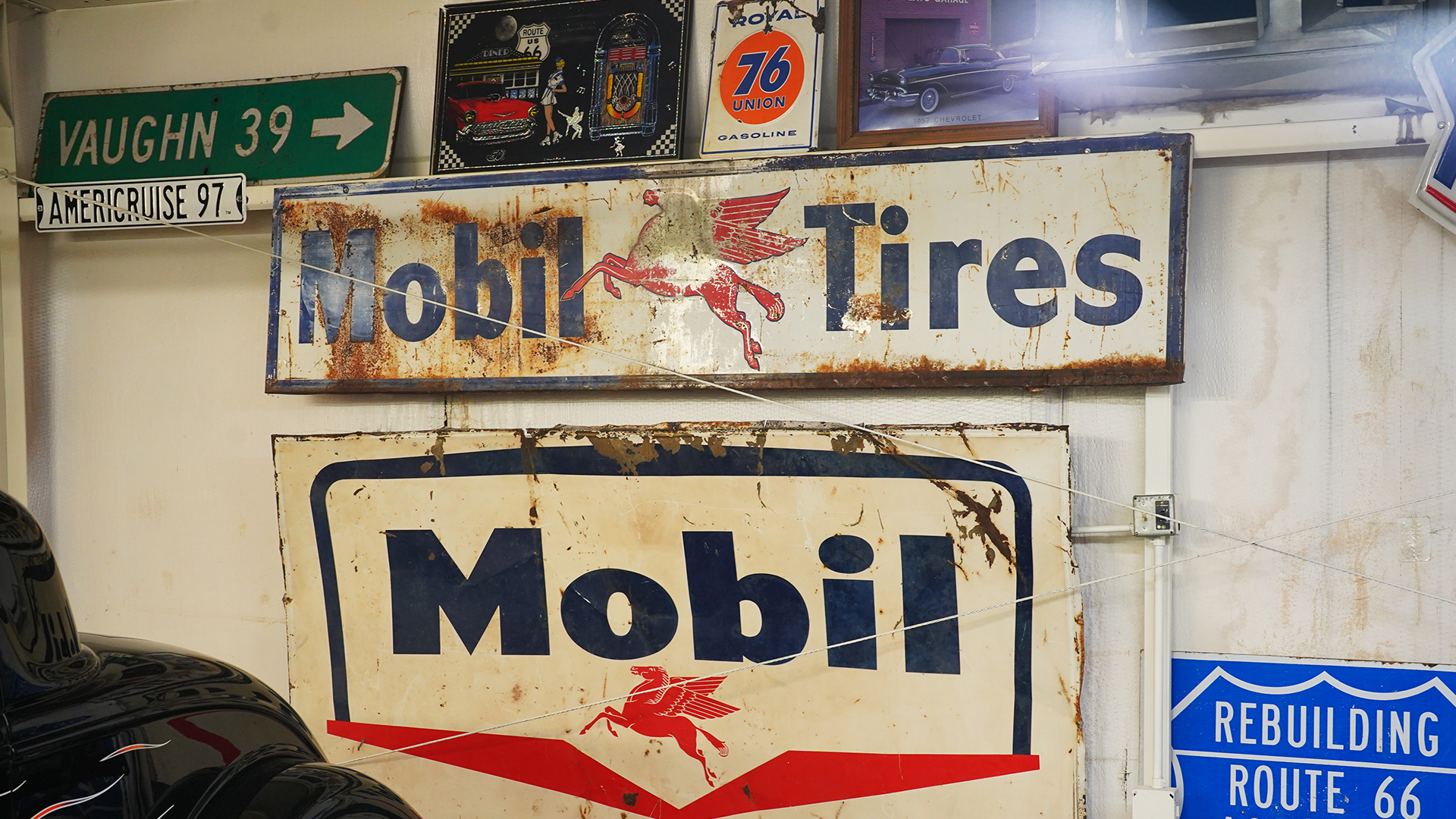
As cars advanced and style became culturally important, Route 66 mimicked those aesthetics in neon and futuristic design. Route 66 was the opposite of a sterile highway like I-40. It had its own unique culture that was built upon and shaped by the cars that drove it.