Switch to the dark mode that's kinder on your eyes at night time.
Switch to the light mode that's kinder on your eyes at day time.
Hues of Red, Bands of Blue: The Painted Desert
Route 66 is usually associated with unique motels, odd roadside attractions, old fashioned gas stations, and one of a kind eateries, but travel east of Holbrook, Arizona and you’ll find a completely different view. Exit 311 off Interstate 40 leads travelers directly into the north end of the Petrified Forest National Park.
Currently, Route 66 aligns with I-40 along this stretch. The interstate bypassed the Mother Road in 1958. Before the realignment, though, the Petrified Forest was the only National Park to contain a section of the Dust Bowl Highway.
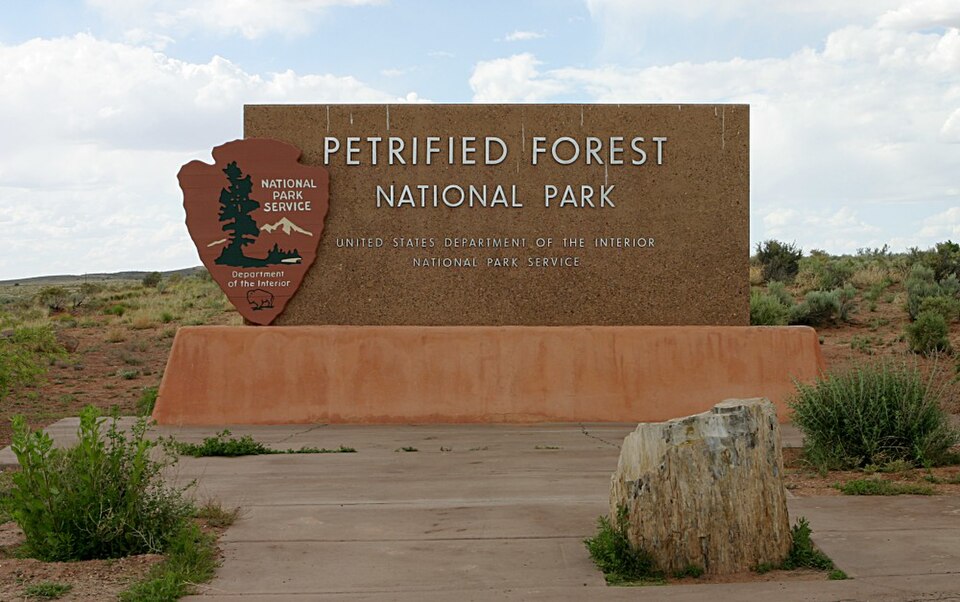
Petrified Forest National Park north entrance sign. Photo by Cburnett, CC BY-SA 3.0.
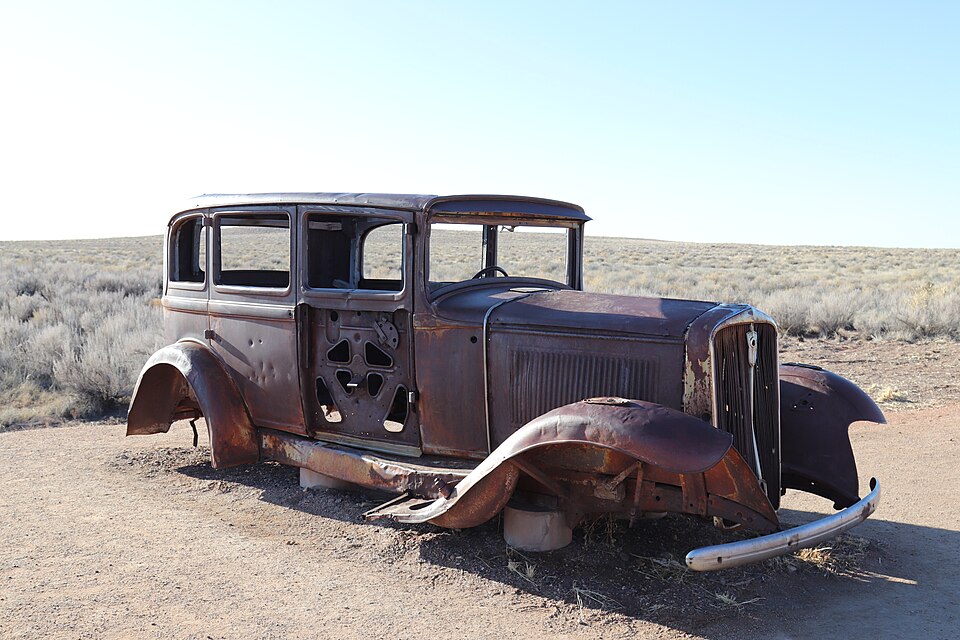
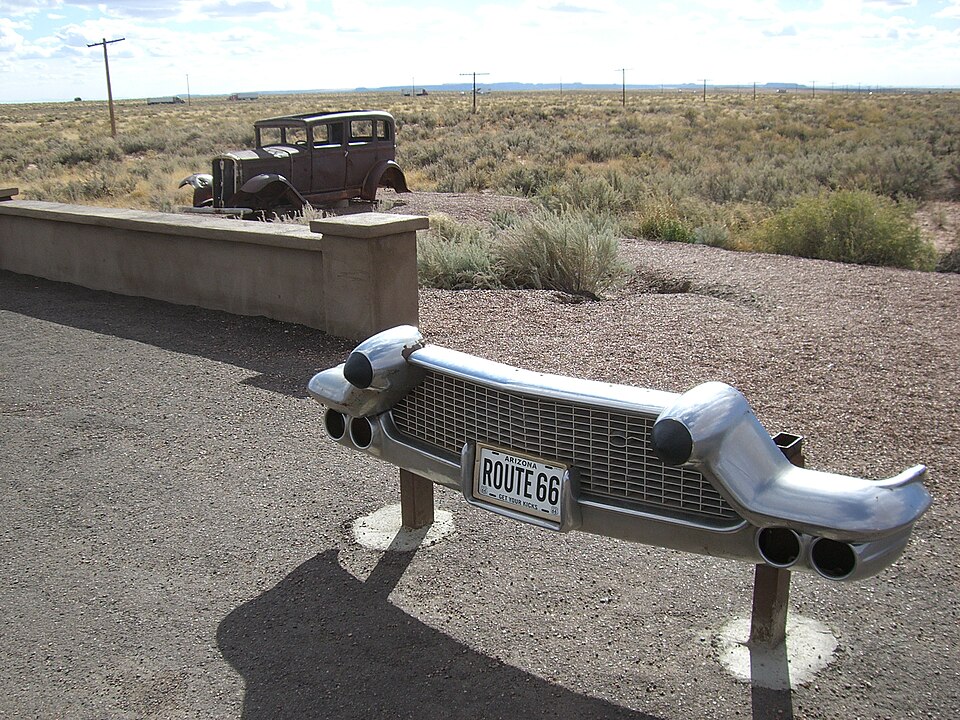
Today, a monument along the original route stands, inviting tourists to stop and appreciate this long lost section of road. A concrete bench with a debossed Route 66 route marker stands in the expansive wilderness. On the back side of the bench, a vintage car bumper has been embedded into the stone. The site also has an old 1932 Studebaker evocative of a time when automobiles raced through a landscape now barren.
1932 Studebaker automobile at Petrified Forest National Park, Arizona. Photo by daveynin, CC BY 2.0
Maybe the most interesting things about this 66 landmark are the remains from the original road. Telephone poles above where the route used to be dot the landscape as far as the eye can see. Original stone route markers can even be found on the ground, outlining where the road once ran. While the pavement from this section of Route 66 was removed in 1960, artifacts indicate a former thoroughfare.
Before the bench. Photo: Diego Delso, delso.photo, License CC BY-SA
Travel about three miles up the road to find another remnant from the past. Here you’ll find the old Painted Desert Inn. Its remoteness and grand view of the National Park make it a picturesque destination.
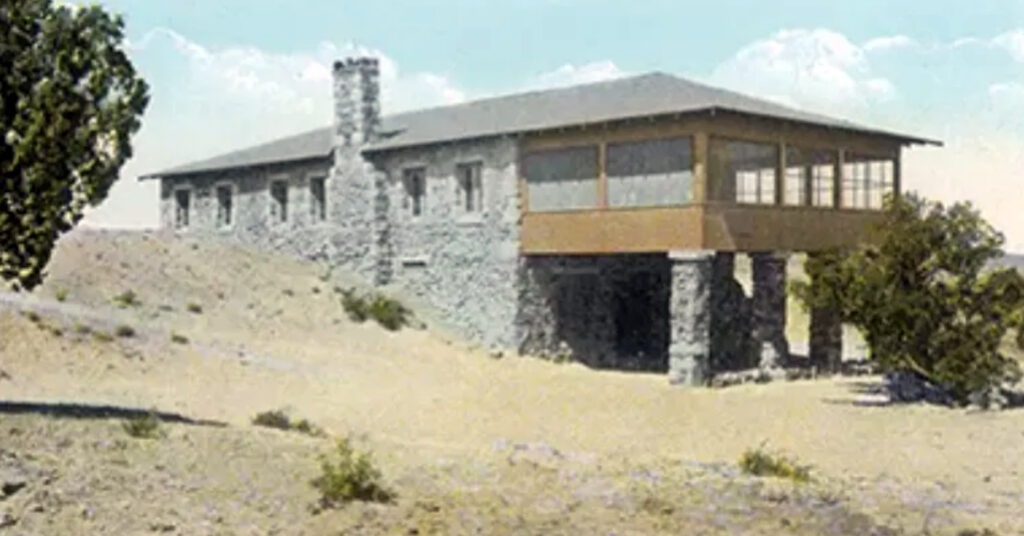
Original Stone Tree House. Photo: NPS Museum Collection.
The Inn opened in 1924 as the Stone Tree House. It was constructed using natural elements such as petrified wood and sandstone. Owner Herbert David Lore ran the Inn for 12 years providing provisions and accommodations for travelers passing through this rugged and desolate stretch of road.
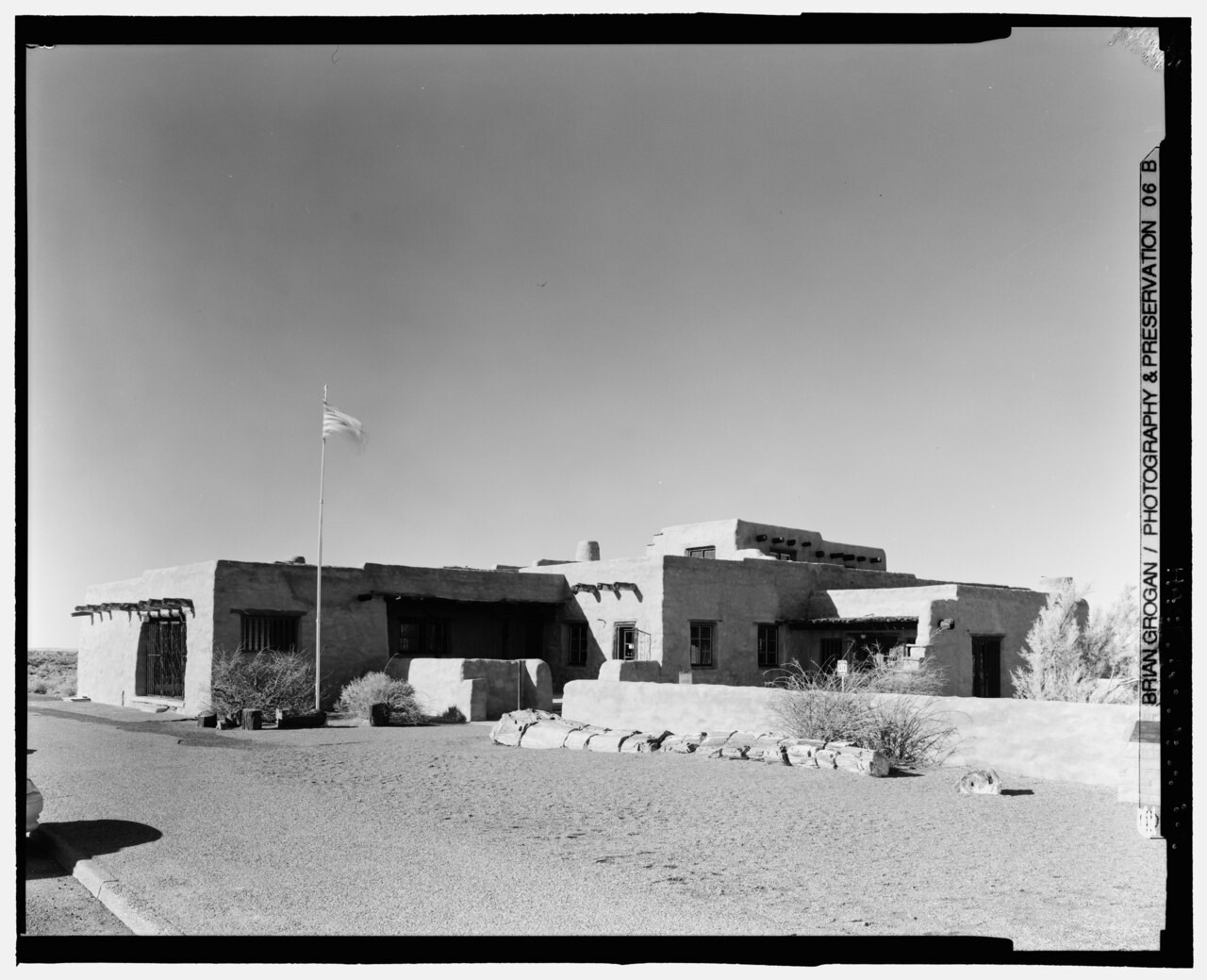
In 1936 the property was purchased by the National Park Service. Over the next four years the Stone Tree House was transformed into the Painted Desert Inn. The remodeling was done in the Pueblo Revival style giving it a classic Southwestern look. The inn provided overnight lodging to travelers through 1947. During the late 1940s and ’50s, the inn continued to sell food and souvenirs, and was considered the must see destination of the park. Sadly, it fell into disrepair over time and closed its doors in 1962 because of structural issues.
Painted Desert Inn. Looking NW. Photo by Brian Grogan, Library of Congress.
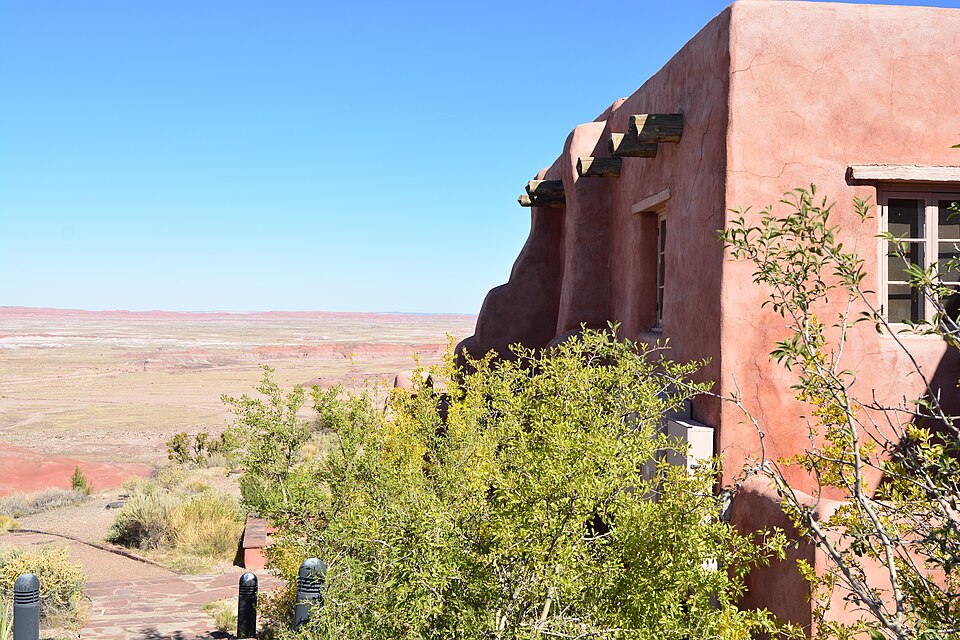
Fast forward to 2006: the inn was once again restored and opened as a museum which is still in operation today. The classic exterior adobe design, interior detailing which features indigenous elements from the area, and expansive views makes this museum a necessary stop for anybody passing through these badlands.
Joe Mabel, CC BY-SA 4.0.
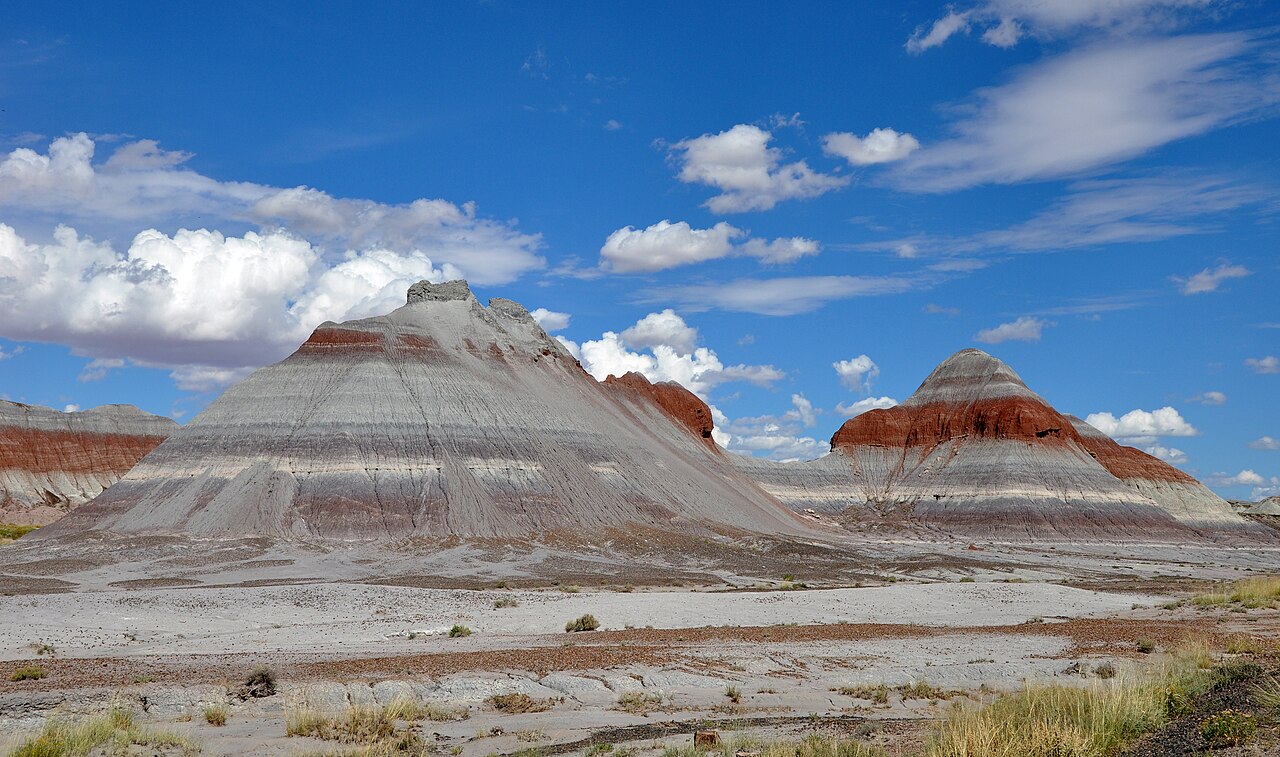
While the Route 66 landmarks in this area are incredible keys to a recent past, it’s the nature itself in this part of the country that opens a gateway to an ancient timeline. Photo: Finetooth, CC BY-SA 3.0.
The Petrified Forest was established by Theodore Roosevelt as a national monument in 1906. In 1962 it was designated as a national park. The nature reserve can be broken into two sections. To the north (where historic Route 66 once crossed) visitors can experience the painted desert – a beautiful section of badlands ranging in color from deep red to blue to grey. Iron results in red hues while manganese streaks blue to purple. The palette is further altered by the volcanic ash present in the soil.
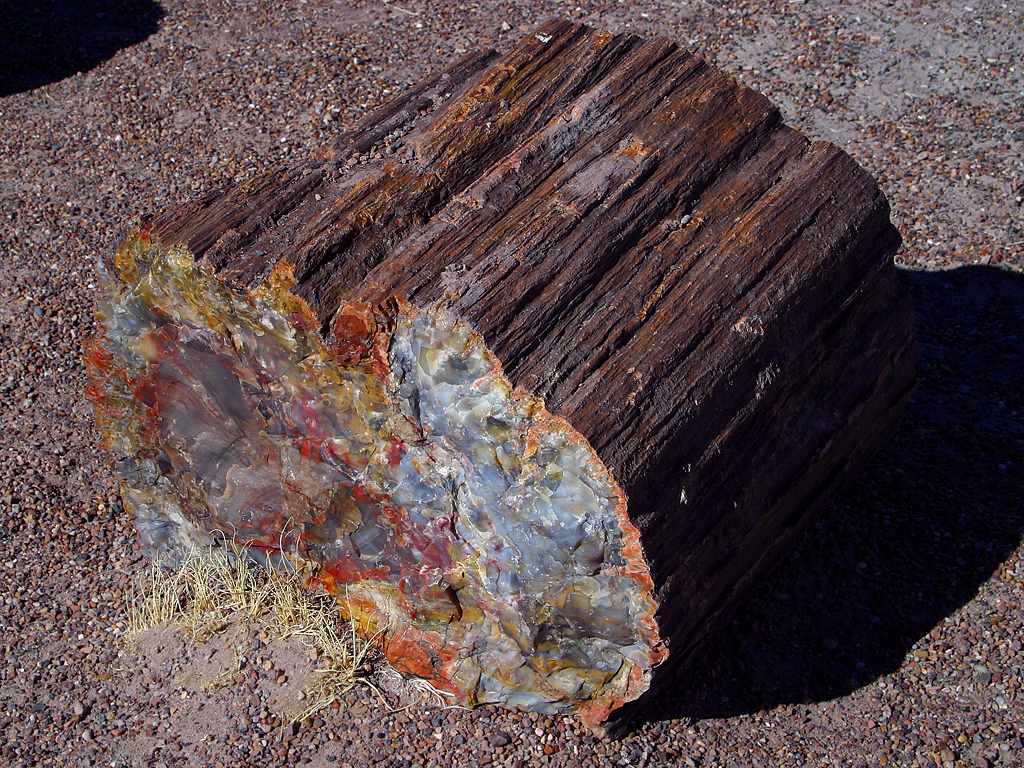
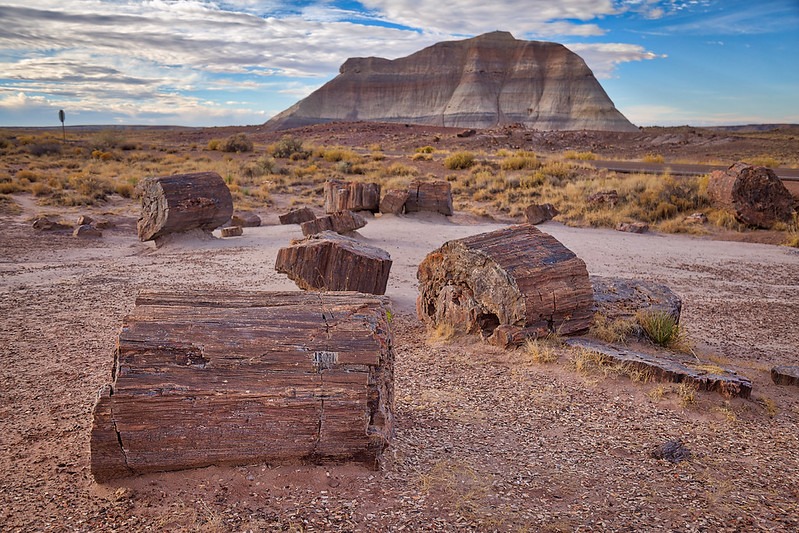
The southern section of the park contains the petrified forest. This stone forest was formed when the area shifted from lush woodland to desert. Trees were buried and mineralized by volcanic ash forming crystalized fossils over the course of more than 200 million years.
Photo by Jon Sullivan
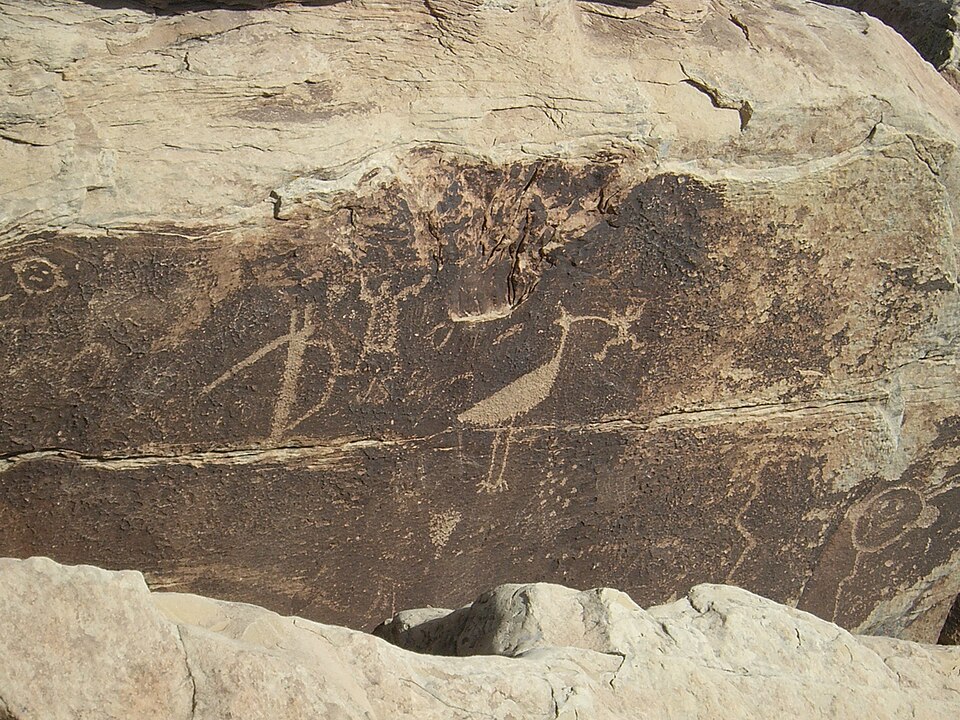
Indigenous peoples have been living in this region as far back as 13,000 years ago. Petroglyphs, arrowheads, and ceramics from this time can still be seen today. When conquistador Francisco Vazquez de Coronado explored the area in 1540 while in search of the Seven Cities of Cibola, he named the area “El Disierto Pintado” or The Painted Desert.
Petroglyph. Photo by Diego Delso, delso.photo, License CC BY-SA
Over millions of years this region was formed into the landscape we know today. Soft rock like mudstone and bentonite clay has been transformed by wind and rain. The clay’s expanding (wet) or cracked (dry) nature causes the landscape to be essentially devoid of vegetation. Because plants aren’t holding soil together, the land has been easily eroded by the elements. Over millions of years the Colorado Plateau has elevated, further exposing the terrain to weather conditions and exposing its beautifully colored bands.
The Petrified Forest National Park is an American treasure. Its unique geology is similar to Route 66 in that it continues to change over time while maintaining a connection to the past. Whether it’s a broken down gas station from the 1950’s or a faded petroglyph from 13,000 years ago, these remnants inform cultural identity. Change is inevitable, but an understanding of where we came from establishes roots that cannot be cut by changing winds.Petrified Forest National Park. Photo by Mobilus In Mobili via Flickr. CC BY-SA 2.0